CONTACT FOR DEMO CLASS : (+91) 8951869553/52
CONTACT FOR DEMO CLASS : (+91) 8951869553/52
Course Start Date: TBD
This micro session focuses on how Artificial Intelligence tools are transforming modern accounting workflows. Participants will learn how AI automates tasks such as bookkeeping, invoice processing, reconciliation, expense tracking, and financial reporting using real-world accounting tools.

Learn to use Generative AI tools for smart lead generation, personalized outreach, and automated sales growth.

No boring theory. Every session includes real tools, real prompts, real workflows, real AI agents, giving you skills you can use the same day.
AI evolves every week. Micro-learning ensures you stay updated with latest tools, frameworks, and use-cases without wasting time on outdated content.
Micro-sessions fit perfectly into your day
In this power-packed session, participants will learn how to apply
AI-powered tools to
automate accounting processes.
This micro session is designed for students, accounting professionals,
finance teams, and business owners who want to understand how
AI-driven accounting automation works in real-world
business environments.
Through real-time demonstrations and
guided hands-on activities, participants will work with
AI accounting tools to automate tasks such as
bookkeeping, invoice processing, expense categorization, and bank reconciliation.
By the end of the session, learners will gain
practical skills, reusable automation workflows,
and an end-to-end accounting automation framework that can be
applied to real-world accounting operations.
Participants will gain hands-on experience with modern AI tools used in accounting, understand how repetitive manual tasks can be automated, and learn how AI improves accuracy, efficiency, and compliance in day-to-day accounting workflows.
EarlyRise's AI Tools for Accounting Automation – Micro Session Key Features Understand how AI automates day-to-day accounting tasks
Reduce manual errors in bookkeeping and reconciliation
Save time using AI-powered accounting tools
Apply AI automation to real accounting workflows
Improve productivity and compliance in finance operations
Gain practical experience with modern accounting automation tools
Customized to your team's needs
Key Learning Objective: Understand how AI tools for accounting automation streamline traditional accounting processes by automating bookkeeping, data entry, and record maintenance, improving accuracy, efficiency, and compliance in accounting workflows.
Key Learning Objective: Learn how to prepare accounting data and configure AI accounting automation tools to automate workflows such as invoice processing, expense categorization, and bank reconciliation.
Key Learning Objective: Understand and differentiate key accounting data types such as invoices, ledger entries, expense records, bank transactions, timestamps, vendor details, and audit trails that are commonly used by AI tools for accounting automation.
Key Learning Objective:Learn how AI-powered accounting tools interpret automation signals to identify exceptions, inconsistencies, duplicate entries, and compliance risks that require human review.
Key Learning Objective: Learn how to design effective AI-driven accounting automation workflows by selecting the right AI tools, configuring automation rules, and structuring inputs that automate tasks such as bookkeeping, invoice processing, expense categorization, and reconciliation.
Key Learning Objective: Understand how AI accounting tools monitor automated workflows and identify exception scenarios such as mismatched transactions, duplicate entries, missing records, and compliance-related issues.
Key Learning Objective: Understand how automated accounting workflows are monitored and validated, and how AI tools identify mismatches, missing entries, and exceptions that require human review.
Key Learning Objective: Learn how AI tools monitor automated accounting workflows to ensure accuracy, consistency, and reliability across bookkeeping, reconciliation, and reporting processes, while minimizing manual intervention.
Key Learning Objective: Understand the complete end-to-end accounting automation workflow, including:
Key Learning Objective: Review key accounting automation concepts and define a clear action plan to apply AI tools for accounting automation in real-world business and finance operations.
Hands-on Activities / Key Deliverables:Final activity where participants outline a practical implementation plan to automate accounting tasks, monitor automated workflows, and integrate AI tools into existing accounting systems.
4 Hours
4 Hours




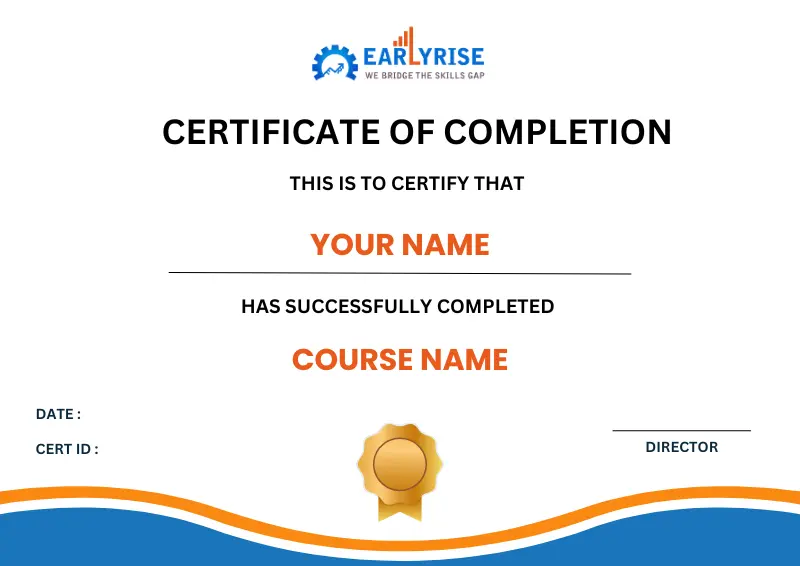
Upon successful completion of the course, participants will receive a certificate from EarlyRise. This certificate is widely recognized and signifies that the holder has acquired specialized skills.
Get In Touch



Our team will be happy to assist you make the right decision

Leading industry professionals who bring current best practices and case studies to sessions that fit into your work schedule.
Our Course fees are very nominal and competitive. We provide Scholarship up to 50% time to time for eligible candidates.
AI tools can automate tasks such as bookkeeping, invoice processing, expense categorization, bank reconciliation, journal entries, and basic financial reporting, significantly reducing manual effort and errors.
Yes. Many AI-powered accounting tools are designed for small businesses and startups, helping them automate routine accounting tasks, save time, and scale operations without hiring large finance teams.
AI tools support accountants by automating repetitive tasks. Accountants still play a crucial role in decision-making, compliance, review, and handling exceptions that require human judgment.
The session focuses on commonly used AI accounting tools and automation platforms, demonstrating how they are applied in real-world accounting workflows rather than promoting any single vendor-specific solution.
AI reduces manual data entry, applies consistent rules, detects mismatches, and flags exceptions automatically, leading to improved accuracy, faster processing, and better compliance.
Please fill up the form below.